Physical Address
304 North Cardinal St.
Dorchester Center, MA 02124
Physical Address
304 North Cardinal St.
Dorchester Center, MA 02124

The Quiet Fracture: What We Don’t Say About Being the “Strong One”
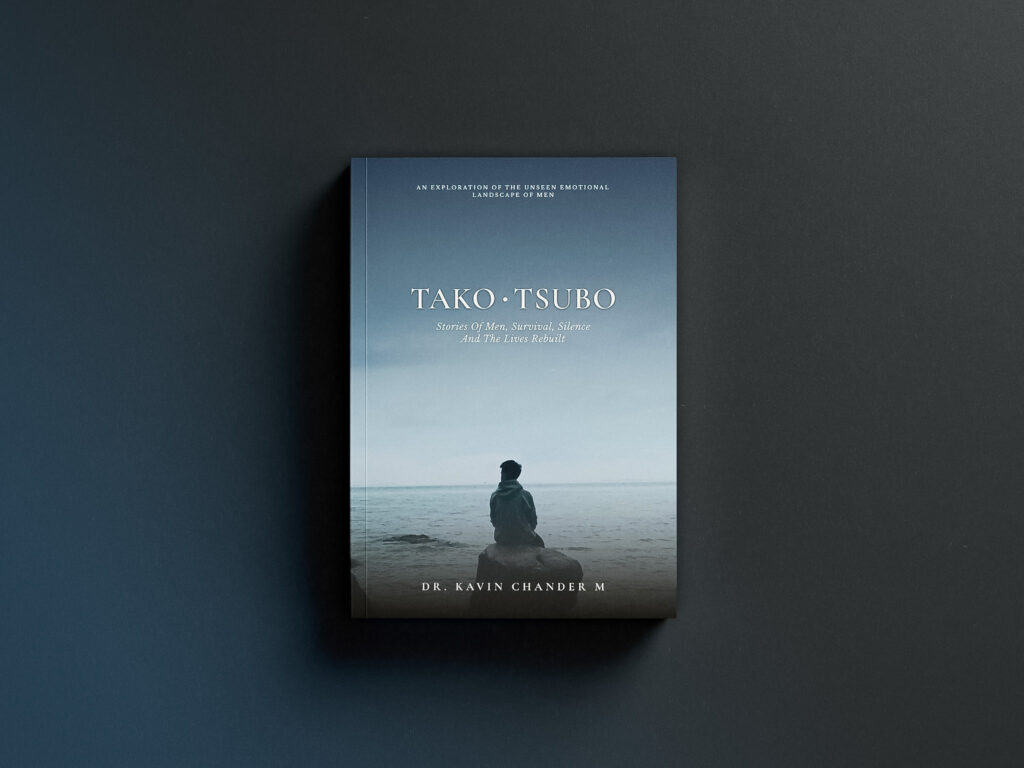
There is a specific kind of exhaustion that doesn’t come from a lack of sleep, but from the weight of being the person everyone else relies on. We all know someone like this—or perhaps we are that person. The one who is the “advisor,” the steady presence in a crisis, the “rock” who seems to have everything figured out. But the book Tako Tsubo pulls back the curtain on this performance, exploring the silent, internal disintegration of those who are expected to be irreplaceable. It’s a raw, human look at the “quiet breaking” that happens when the support system has no support system of its own.
One of the most striking concepts the book introduces is the “mathematics of male worth.” In our society, a man’s value is often reduced to his output—his ability to provide, his productivity, and his success. We treat men like machines of utility, and as long as they are “functioning,” we assume they are fine. This creates a dangerous trap: if a man stops producing or admits he is struggling, he feels he is losing his very identity and worth. This conditioning forces many to wear a mask of being “fine,” an active and draining performance that hides a world of insomnia, emotional numbness, and deep-seated despair.
Through the lived experiences of men like Rahul, Vicky, and Pravin, the narrative shows that grief isn’t a linear path to “healing,” but a brutal transformation. We see a high-achieving medical student become the “translator of death” for his family while his own life is falling apart, and a pediatric surgeon who saves countless lives but is powerless to save those he loves most. These stories highlight a “muted transformation” where the person who comes out on the other side of loss is fundamentally different from the one who entered it. The “before” version of you is gone, and you are left to build a life as a “survival-shaped” version of yourself.
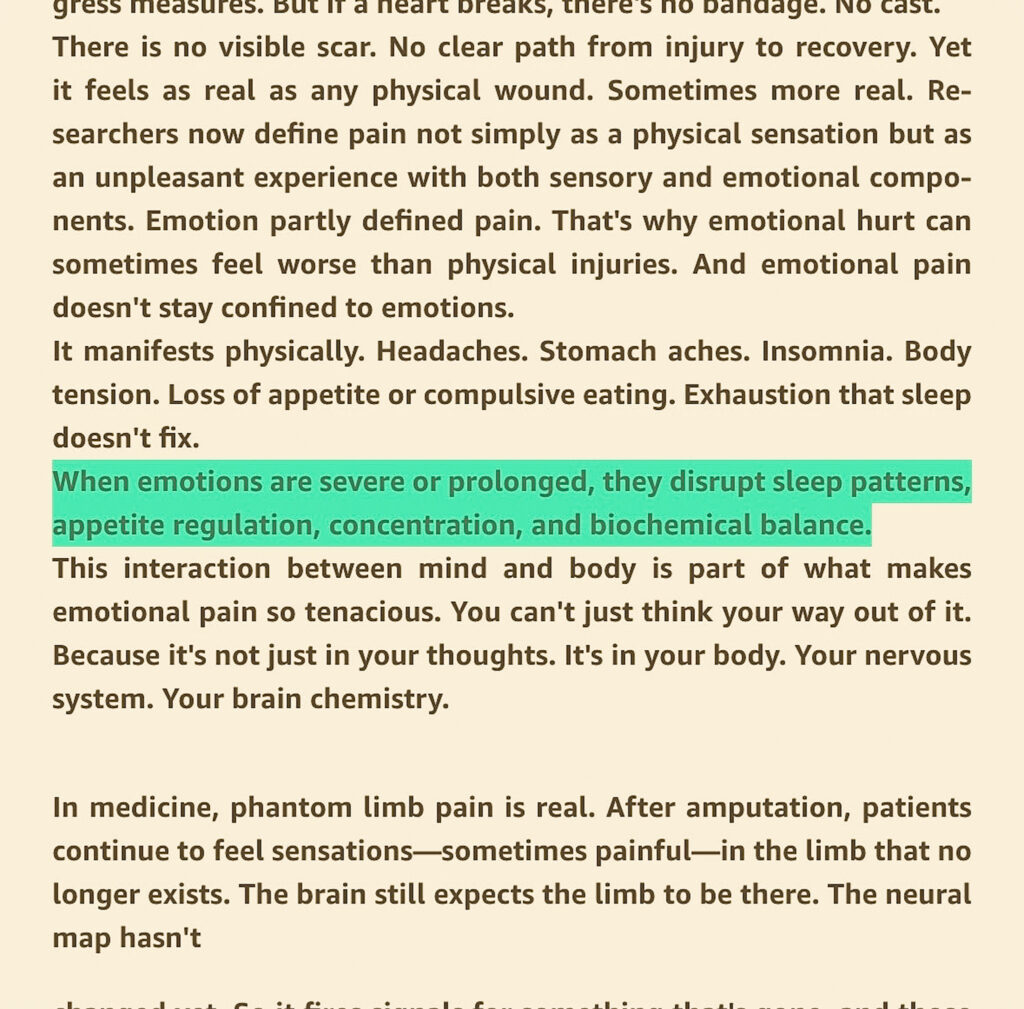
The book also bridges the gap between the emotional and the biological, explaining the science of breaking. It turns out that heartbreak isn’t just a metaphor; it’s a neurological reality. Functional MRI studies show that the brain processes emotional heartbreak in the same regions as physical pain. Furthermore, for men, physical intimacy often fuses with emotional attachment to create “pair-bond” pathways that associate a partner with survival-level needs. When a relationship ends—especially through calculated betrayal—the brain enters a state of literal withdrawal, craving the neurochemical “hit” it once received from the partner. Understanding this removes the shame; it’s not weakness, it’s neuroscience.
Tako Tsubo is also a necessary critique of the platitudes we offer to the grieving. We are often told that “everything happens for a reason” or that “time heals all wounds.” The book argues that these are well-intentioned lies. Sometimes, loss is just random, arbitrary, and godless. Time itself doesn’t heal anything; it is merely a witness to the active, grueling work you do within that space. Healing is an active choice to integrate the loss into your story rather than trying to erase it or “get over” it.
There is also a profound exploration of the loneliness of silence. When you are the one with all the answers, you lose the ability to ask questions. When you are the rock, you feel you cannot show that you are crumbling. This creates a “performance gap” where you are surrounded by people who think they know you but have no idea you are disintegrating. The book encourages us to start breaking this silence, even if it’s just telling one true thing to one person: “I’m not actually fine”.
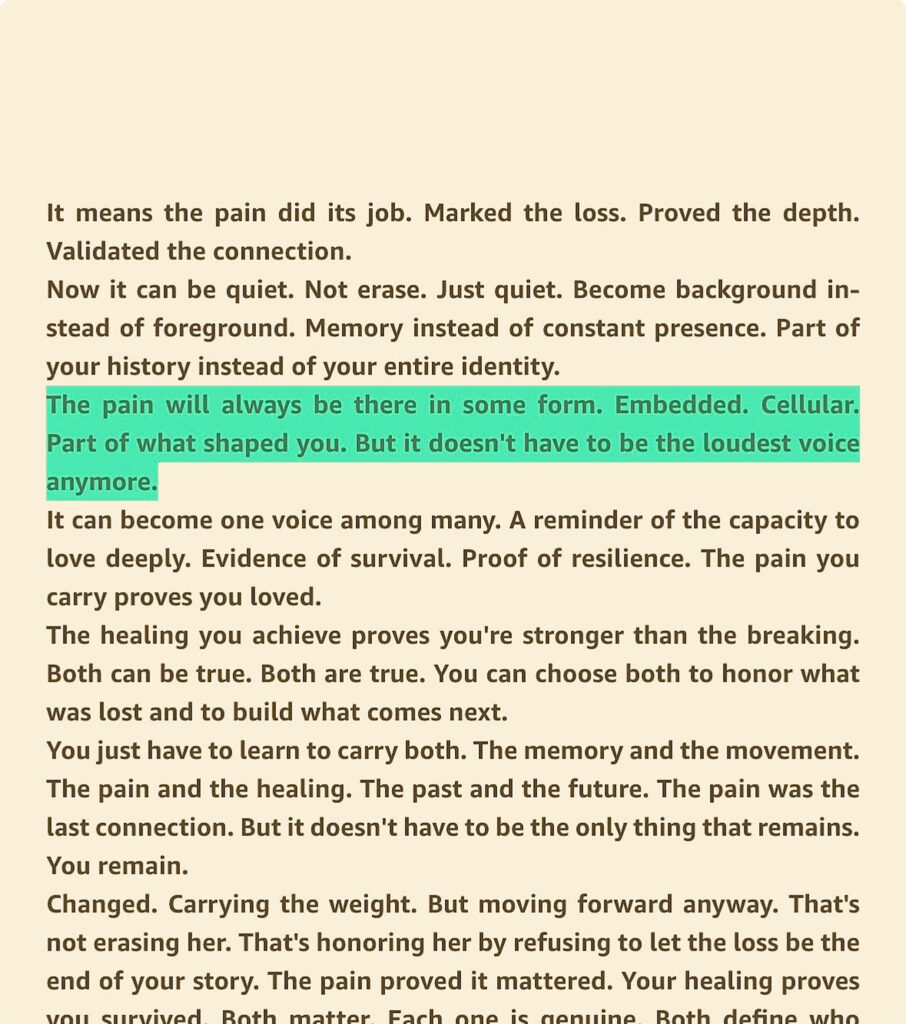
Ultimately, this book is about carrying permanent weight. It teaches us that while the weight of loss may never fully lift, we can develop the capacity and the strength to carry it without being crushed. It’s about rediscovering yourself not as a “fixed” person, but as an excellent human who has survived the unsurvivable. It’s a reminder that true strength isn’t about being unbreakable; it’s about breaking, transforming, and finding a way to move forward anyway.
For anyone who has ever felt they had to hide their own cracks while holding up the world, Tako Tsubo offers more than just a story; it offers a map. It validates the pain, explains the science behind it, and proves that while you might never be the same, you can still be whole. It is a necessary witness to the quiet battles fought every day by those we think are the strongest among us.