Physical Address
304 North Cardinal St.
Dorchester Center, MA 02124
Physical Address
304 North Cardinal St.
Dorchester Center, MA 02124

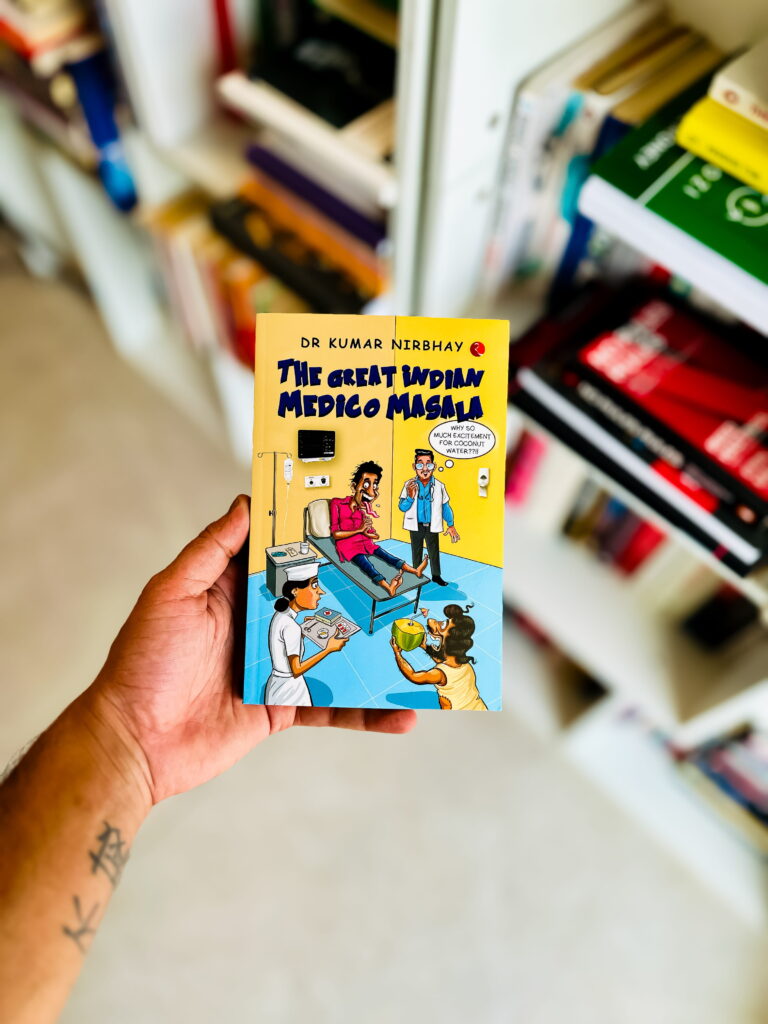
If you’ve ever wondered what actually happens behind the heavy swinging doors of an Indian government hospital—beyond the smell of phenyl and the endless queues—then The Great Indian Medico Masala by Dr Arun is the backstage pass you didn’t know you needed. This isn’t a textbook or a dry medical memoir. Instead, it feels like a long, unfiltered conversation with a senior cousin who has survived the trenches of the Indian medical system and lived to tell the tales with a wink and a sigh. It’s a book that captures the “masala” of life: a chaotic, spicy, and often unpredictable blend of tragedy and comedy.
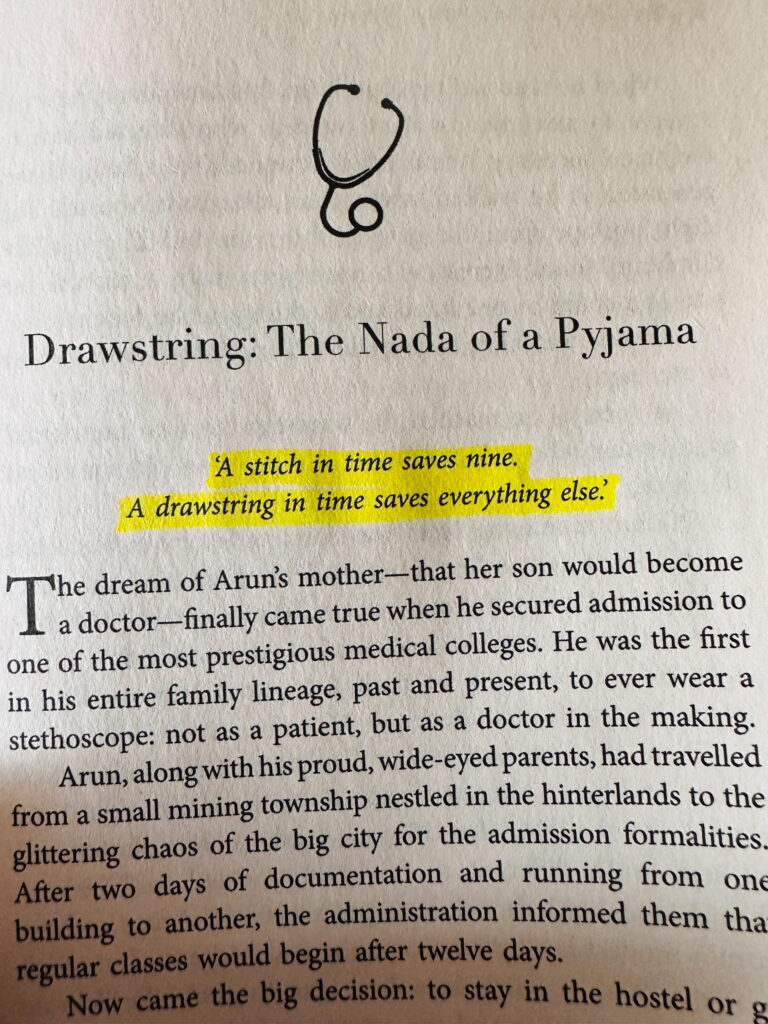
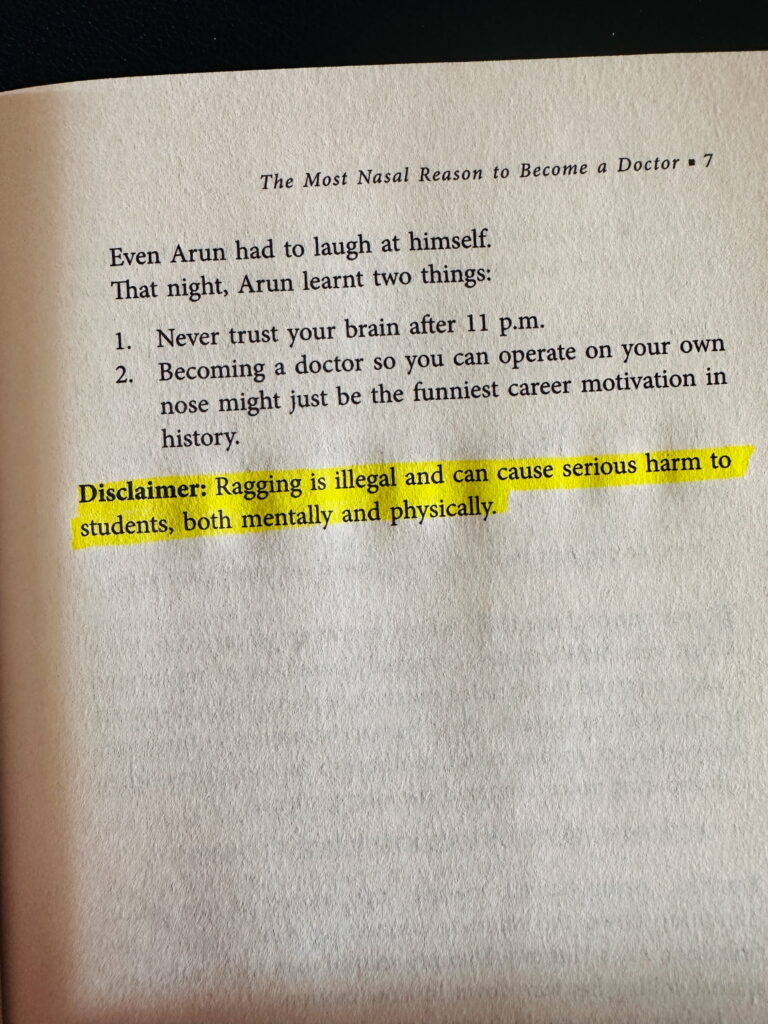
The journey begins exactly where every Indian doctor’s soul is forged: the medical college hostel. Dr Arun perfectly captures the sheer terror and hilarity of the “introduction phase”—that polite euphemism for ragging. One of my favourite moments in the book involves a strategic “nada” (drawstring) of a pyjama. Faced with a “strip order” from his seniors, a young Arun decides that if he’s going to be embarrassed, he’s going to go all in. He ditches his underwear, wears only a loose pyjama, and drops the “curtain” with such theatrical confidence that the stunned seniors actually let him go out of pure shock. It’s this kind of resourcefulness that defines the “medico” spirit.
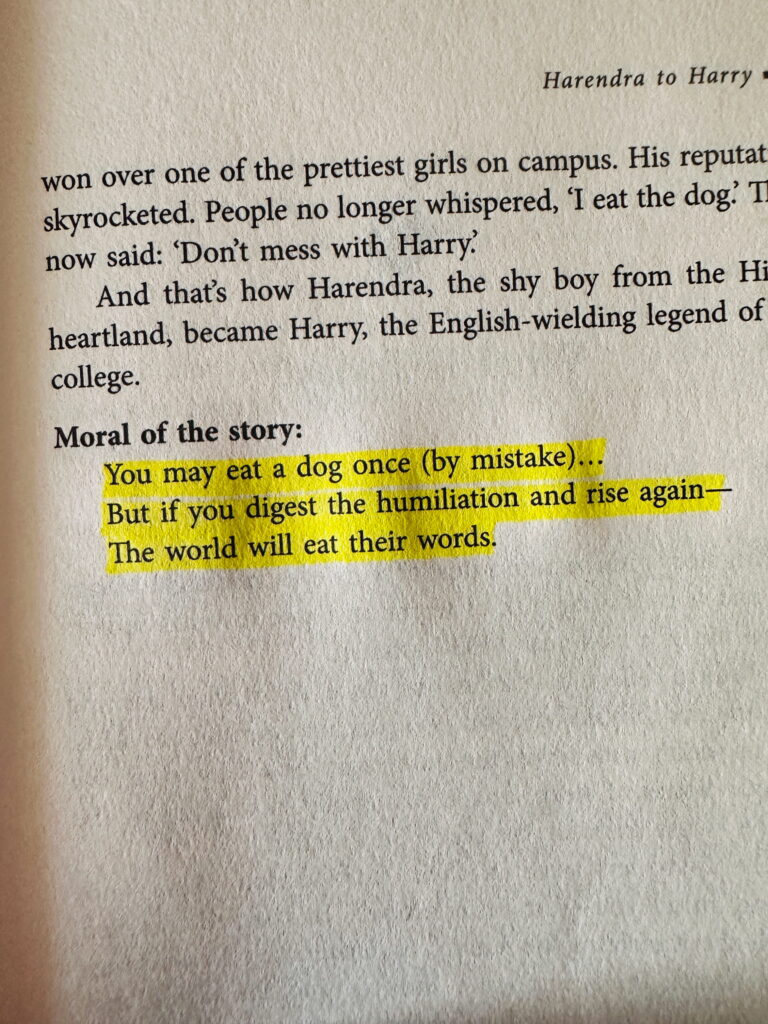
The book is filled with legendary characters that every college student will recognize. There’s “Harry” (Harendra), a boy from the Hindi heartland who was once mocked for his broken English—specifically the infamous “I eat the dog” translation—but who reinvented himself into a linguistic “sultan of sarcasm” whose vocabulary became “nuclear-grade”. Then there’s the terrifying “Dr Ravan,” a unit head who looked like the demon king from the TV shows and spoke in “intellectual torture devices.” His one-liners, like the “forensic definition” of a virgin, are the stuff of campus legend.
But the “masala” really kicks in when the author transitions into his career with the Indian Railways. Working in a railway hospital is apparently less about Grey’s Anatomy and more like a daily soap opera. You meet the “Einsteinian Alcoholic” who managed to outsmart CCTV cameras and ward sisters by stashing his liquor bottles in the one place no one dared to look: the toilet flush tank. There’s also the mysterious “Wednesday Virus,” a phenomenon where patients who were perfectly fit for discharge on Tuesday suddenly developed “nausea” and “dizziness” on Wednesday morning—only to be miraculously cured after the hospital canteen’s legendary Wednesday chicken curry was served.
Dr Arun has a real gift for highlighting the bizarre contradictions of modern India. He tells us about a YouTuber who barged into the casualty ward with mild bronchitis, only to flee the moment she was asked to be admitted because she had to “shoot a video” that night. Apparently, in the 21st century, “likes” are more important than lungs. Then there’s the “Lota Therapy” incident, where a graduate engineer—someone who should definitely know better—showed up with a circular burn mark on his stomach because a local “Baba” told him a hot metal vessel would cure his “bad air”. It’s a funny, frustrating, and incredibly real look at how superstition still dances with science in our wards.
However, it’s not all laughs. As the review moves into the later sections of the book, the tone shifts to something much more profound. The author doesn’t shy away from the darker side of the human condition. The story of the “Desiderate Son” is a gut-punch. It describes an elderly, paralysed man whose wife pushed his stretcher for 100 kilometres to get him help. They had sacrificed everything for their youngest son, their “old-age insurance,” only for him to throw them out of the house once he secured his father’s property and a job on compassionate grounds. It’s a chilling reminder that in the “family ledger,” daughters are often the ones who show up with medicine and care, while the “heirs” are just waiting for the will to be read.
The same haunting loneliness appears in the story of the “Lone Alcoholic”—a man who spent three years dying in the ward, never visited by his wife or child. Yet, the moment he passed away, his wife appeared at the hospital with a briefcase full of documents, not to mourn, but to claim his railway job. These stories force you to reflect on the nature of duty, love, and the masks people wear. As Dr Arun notes, sometimes medicine ends where philosophy begins.
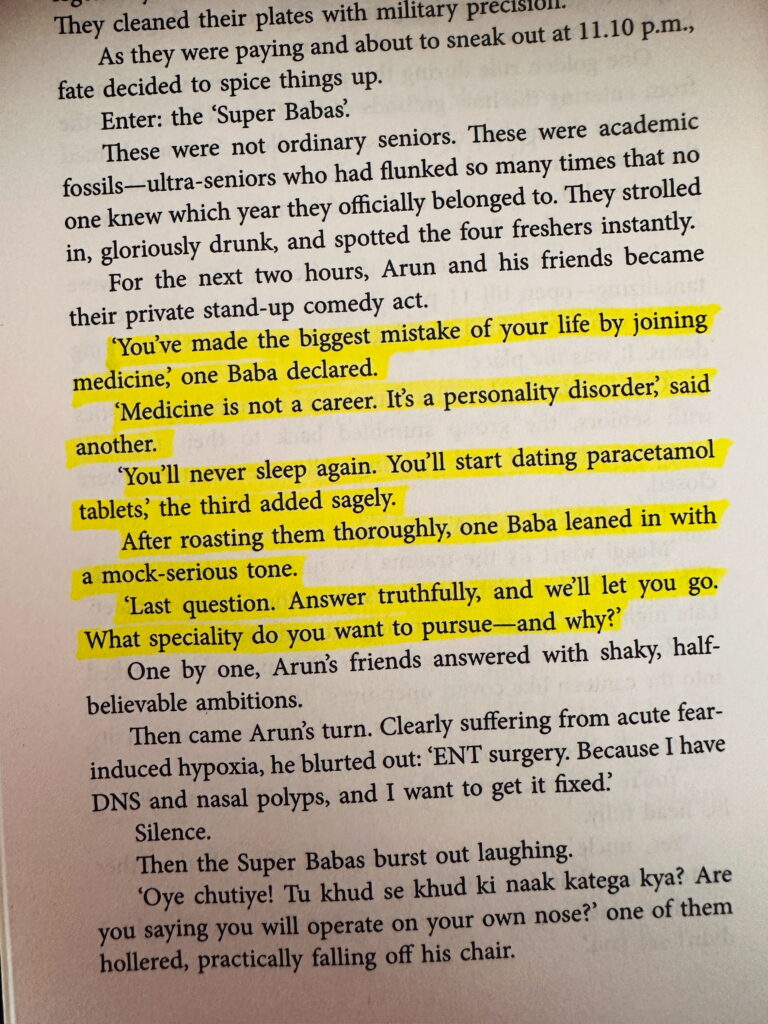
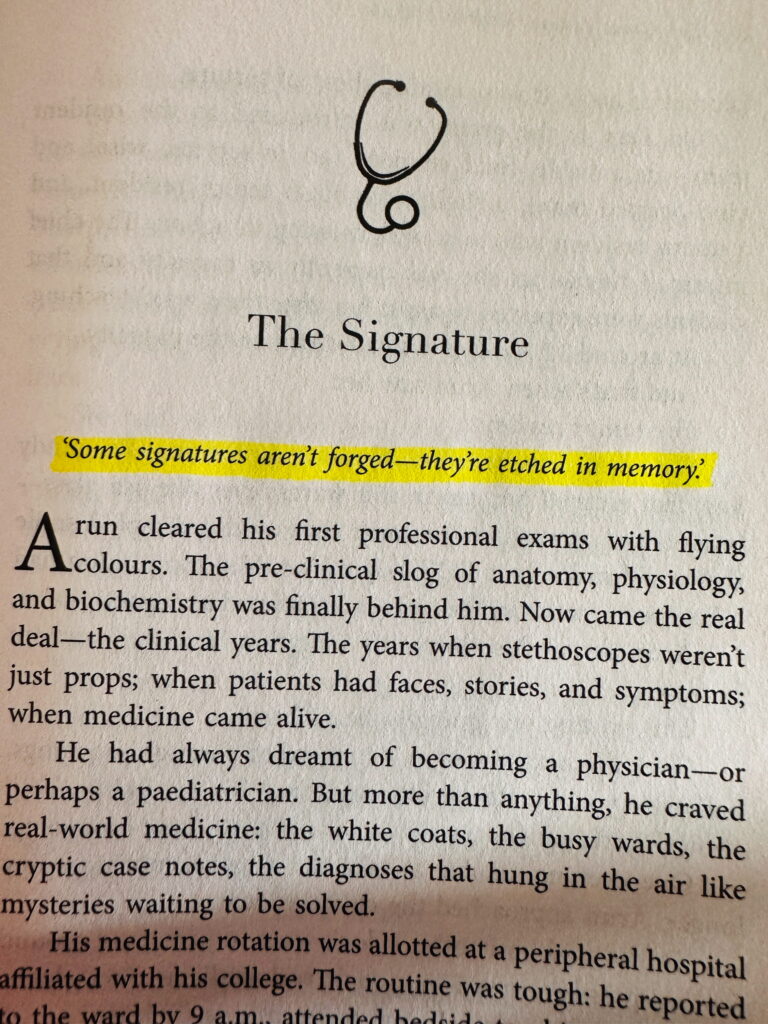
What makes this book special is that it treats every patient as a story rather than a file number. Whether it’s the “Palmist” who was gasping for company rather than oxygen, or the “Feisty Flying Officer” who had winked at death during the ’71 war and continued to correct the doctor’s posture even after a double bypass surgery, the human connection is always at the centre.
If I had to summarize the vibe, I’d say it’s a celebration of resilience and humour. It’s written with a simple, human touch that avoids medical jargon, making it accessible to anyone who has ever stepped into a hospital. It reminds us that doctors are also humans who feel “hypoglycaemic” irritation when their lunch is interrupted by a “VIP” patient with a 25-year-old headache.
In the end, The Great Indian Medico Masala is a tribute to the “unsung warriors” of the wards—the nurses who can certify a doctor’s credibility faster than an MD degree and the residents who find joy in a “midnight chai”. It’s a collection of life lessons wrapped in white coats and railway metaphors. It’s funny, it’s heartbreaking, and above all, it’s unapologetically real. If you want to understand the heartbeat of India, skip the statistics and read these stories instead.