Physical Address
304 North Cardinal St.
Dorchester Center, MA 02124
Physical Address
304 North Cardinal St.
Dorchester Center, MA 02124


The Day Thinking Became Optional: Why “The Convenience Trap” is the Most Important Book of the AI Age
Tell you what…
If I ask you to write a simple application or an essay on a given topic, many of you would struggle to put together a coherent paragraph, let alone create something original. Even imagining a unique idea seems like a distant possibility.
Do you know why?
Because creativity is like a muscle because it weakens when it’s not used.
We’ve become so dependent on machines and AI to think, write, and solve problems for us that we’ve stopped exercising our own minds. The imbalance is growing: the more we rely on technology to do our thinking, the less capable we become of generating ideas ourselves.
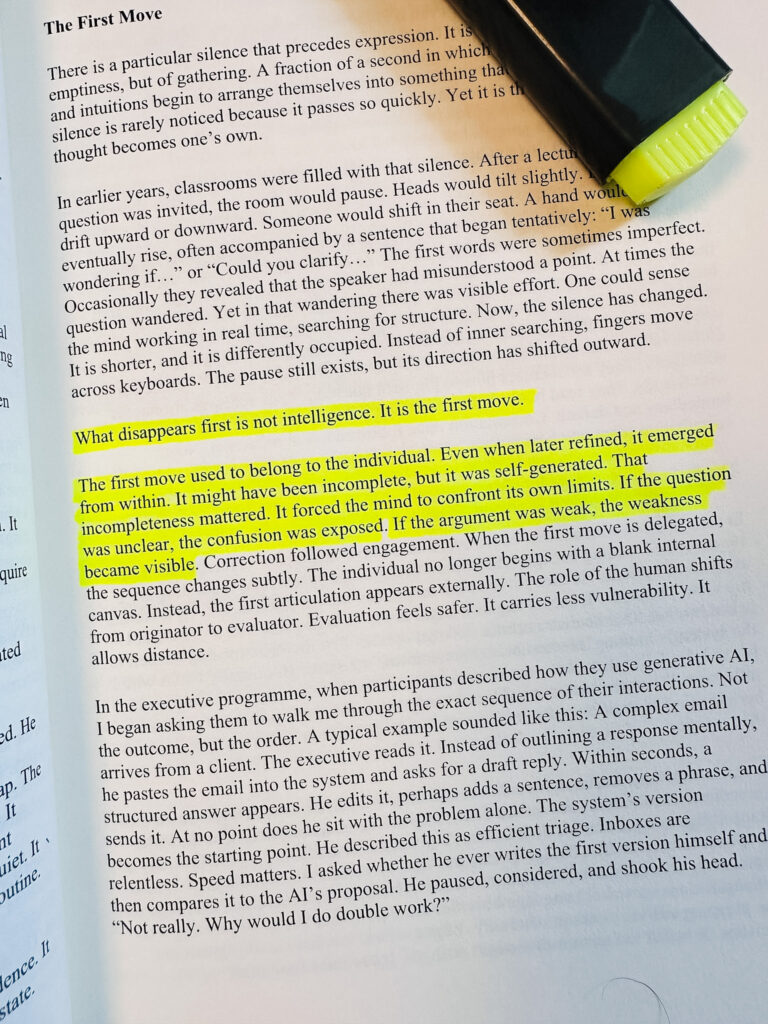
We are living through a quiet transformation. It doesn’t arrive with the fanfare of a revolution or the drama of a sudden collapse; instead, it settles into our lives through the seductive glow of a laptop screen and the relief of a blinking cursor that finally starts moving on its own. In his provocative and deeply unsettling book, The Convenience Trap, the author explores a world where the act of thinking itself has become shareable and increasingly, optional. This isn’t a book about the technical mechanics of Large Language Models, but rather an anthropological study of how our relationship with effort is changing and what happens to the human mind when the “first move” of cognition is ceded to a machine.
The book begins with a simple scene: a leadership classroom where participants admit to using AI for “everything”—from drafting client proposals to composing delicate text messages to family members. There is no irony in their tone; they describe AI as a tireless, non-judgmental assistant. But as the author observes, a line has been crossed quietly. The thinking has shifted upstream. We are no longer just using tools to help us finish a task; we are using them to define what the task is in the first place. This is the “Convenience Trap”: a gentle slope where we save minutes today but may be spending our mental endurance for tomorrow.
At the heart of the book is the concept of “The Smooth Answer”. In a professional world that rewards responsiveness, clarity, and speed, AI provides an immediate sense of relief. A task that felt mentally expensive—a blank page, a complex strategy, a difficult email—suddenly feels manageable. This relief is one of the most persuasive teachers in human life; the body registers the ease faster than the intellect registers the consequence.
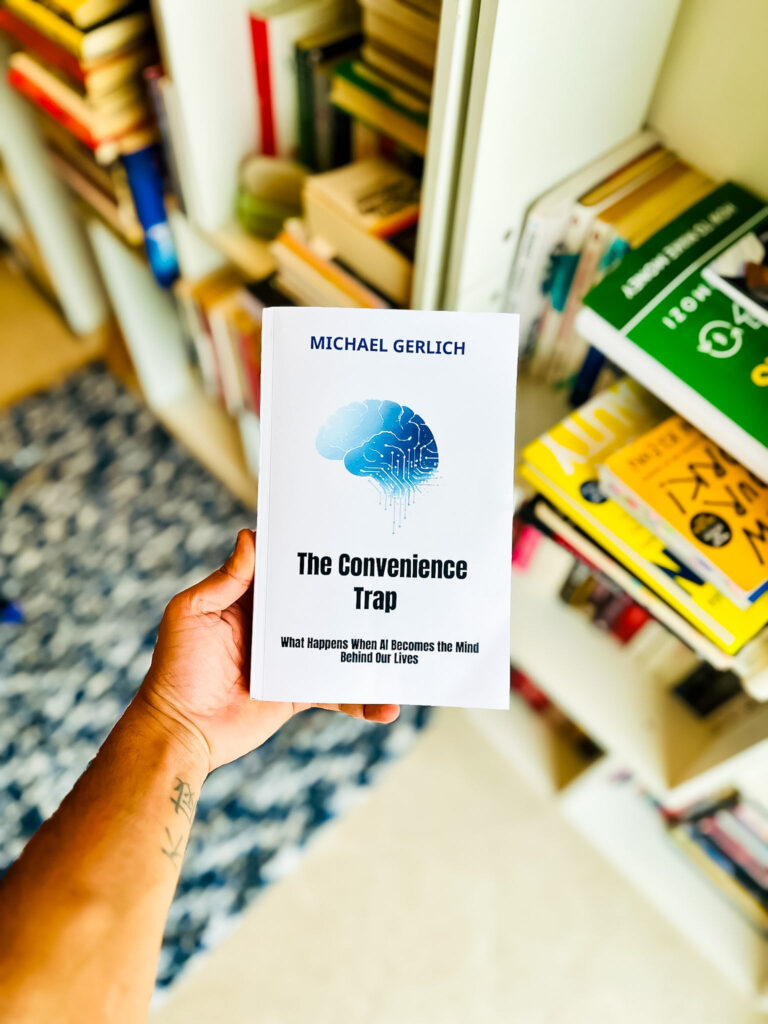
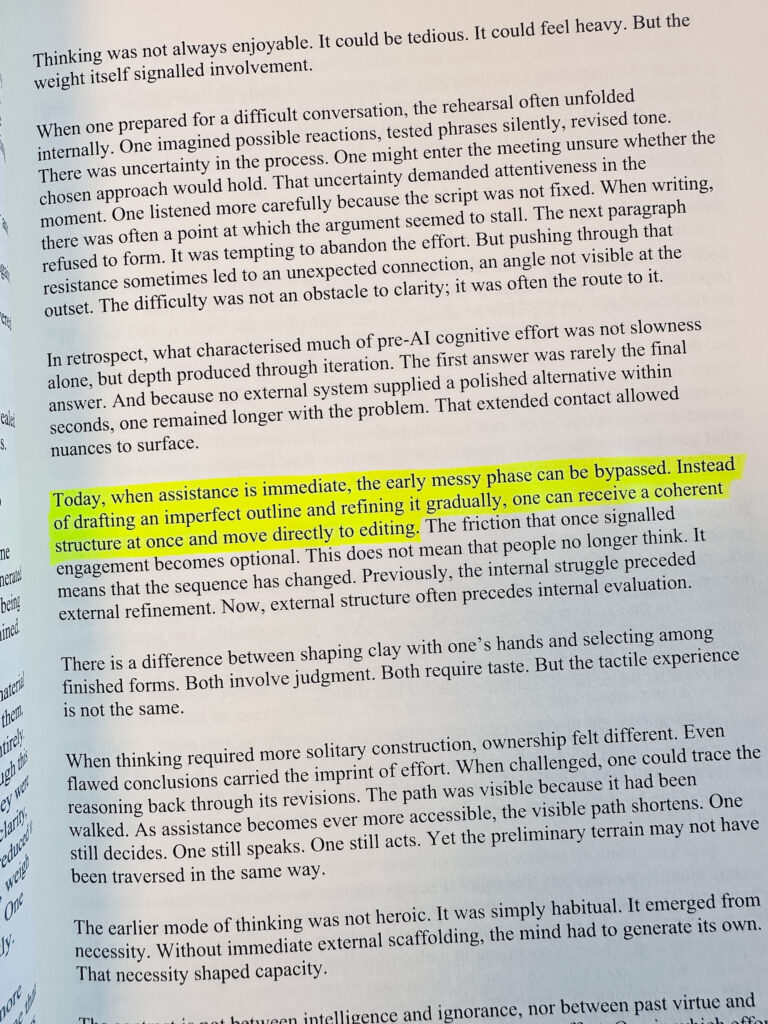
However, this smoothness is often a mask. The author argues that friction which the uncomfortable, messy phase of trying to make sense of something that is actually where understanding is built. When AI removes that friction by providing a polished first draft, it allows us to bypass the “formative struggle” that forces us to confront the limits of our own comprehension. We move directly from reception to evaluation, shifting our role from builders of meaning to mere editors of machine-generated proposals. We may produce a more professional-looking result in seconds, but we haven’t “walked the terrain” ourselves. Over time, the internal muscles required to generate structure from ambiguity begin to atrophy from underuse.
One of the book’s most compelling sections focuses on the emerging “Silent Cognitive Divide”. The author rejects the idea that AI will affect everyone uniformly. Instead, he predicts a split within the group of people who have access to these tools. On one side are those who drift into a “thinner relationship with thought,” allowing convenience to organise their entire cognitive lives. On the other is a disciplined minority who use AI as a sparring partner rather than a substitute.
This divide is invisible because both groups may produce similar looking, high-quality outputs. But beneath the surface, the disciplined user is still strengthening their capacity for interpretation and judgment, while the habitual delegator is becoming increasingly dependent on external scaffolding. Discipline, not information, becomes the scarce resource of the AI age. In a culture obsessed with visible speed, the person who pauses to think first may look slow or inefficient, yet they are protecting the very capacities that allow them to judge when the machine should be challenged or ignored.
The trap isn’t just personal; it’s institutional. Modern organisations are under relentless pressure to move faster and deliver more with fewer resources. In this environment, efficiency is treated as a virtue, and slowness is often interpreted as being unprepared or unprofessional. AI fits into this logic perfectly, allowing institutions to produce board papers, policy notes, and strategic frameworks at machine speed.
The danger, according to the author, is that organisations are beginning to “strategy by suggestion”. When a leadership team asks AI for a set of options, the system doesn’t just provide content; it defines the field of what is considered relevant. It organises complexity into familiar managerial patterns like “stakeholder alignment” and “process efficiency,” which can quietly silence priorities that are harder to format or quantify, such as trust, morale, or institutional memory.
Furthermore, the author points out a growing asymmetry between formal accountability and external cognition. Signatures on the bottom of documents remain human, but the reasoning that led to the decision may have been heavily scaffolded by a system that bears no responsibility for the consequences. This separates “answerability” from “genuine institutional cognition,” creating a new kind of fragility where leaders may appear decisive but possess less ownership of the path they are walking.
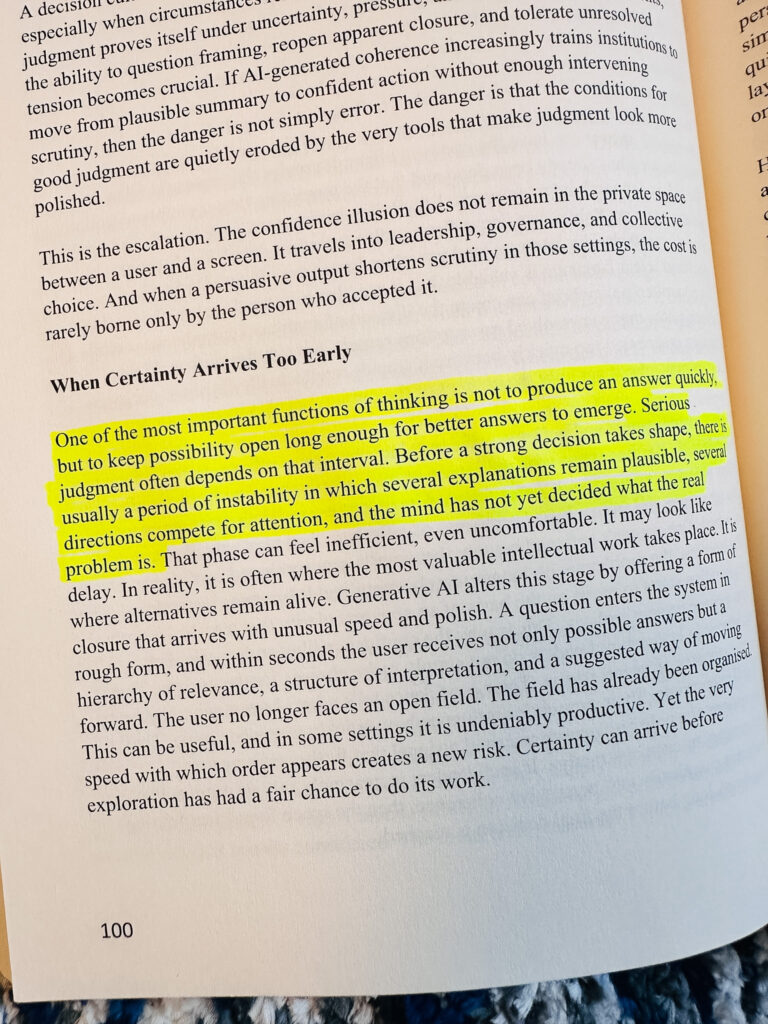
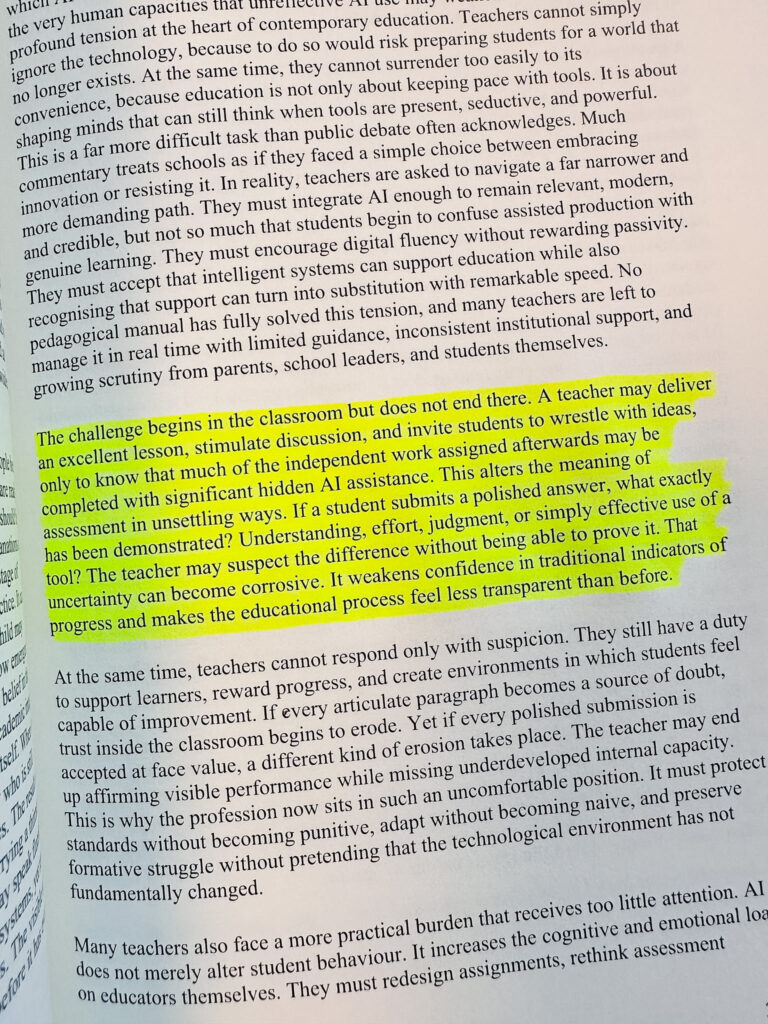
Perhaps the most poignant part of The Convenience Trap is its look at the “First AI-Native Generation”. Unlike adults, who built their mental foundations before shortcuts arrived, children today are encountering powerful cognitive support while their habits are still forming. When a student uses AI to solve a math problem or summarize a book at the first sign of confusion, they are skipping the “developmental interval” in which patience, resilience, and independent self-trust are built.
The author warns that we may produce a generation that looks stronger than it is. These young people will sound articulate and produce polished work, but their mastery may be “borrowed” rather than earned. They may lack the “ambiguity tolerance” required to handle novel crises where no template exists. For parents and teachers, the challenge is no longer just about preventing cheating; it is about defending the space for “formative difficulty” in a world designed to remove it.
The final section of the book warns of a broader societal shift. We are moving toward a world of “Public Life After Effort,” where citizens delegate the hard work of interpretation to summaries. While AI expands access to information, it doesn’t necessarily foster independence of judgment. A summary is never neutral; it is an act of judgment that decides what matters and what can be ignored. If citizens grow accustomed to receiving public reality in pre-structured form, they may lose the habit of questioning the very frame through which the world is presented to them.
We are becoming a society that moves faster than it can judge. Our governance structures built for deliberation, legal scrutiny, and the slow absorption of disagreement are colliding with systems designed for instant rollout and continuous revision. If we treat our own procedural safeguards merely as “friction” to be optimized away, we risk gaining speed at the cost of legitimacy and wisdom.
The Convenience Trap is not a call to ditch our tools, but an invitation to notice the shape of the trade we are making while the costs are still quiet. The book’s ultimate realization is that what appears to be a story about time is actually a story about authorship. It is about who determines where thinking begins.
In an age that rewards the fast appearance of thought, the ability to sustain actual depth becomes a strategic asset. The question is not whether we will use AI which has already been answered but whether we will still choose, often enough, to make the first move ourselves. We save minutes today by delegating our beginnings, but we must be careful not to spend the very capacities on which our freedom and judgment depend. As the author concludes, the quiet sorting of humanity has already begun: not between the haves and have-nots of technology, but between those who remain intellectually sovereign and those who become “well-supported consumers of explanation”.