Physical Address
304 North Cardinal St.
Dorchester Center, MA 02124
Physical Address
304 North Cardinal St.
Dorchester Center, MA 02124


How ‘The Mumbai Method’ Hacks Your Habits
We’ve all been there. You download a meditation app, buy expensive running shoes, or stock your fridge with fresh vegetables, promising yourself that this time will be different. For a few days, you feel motivated and in control. But then a cold Monday morning rolls around, the warm bed feels too good to leave, and soon enough, the old routines creep back in.
When this happens, a familiar inner voice starts whispering that you just aren’t disciplined enough. But what if that voice is completely wrong? What if the real reason you struggle isn’t a lack of willpower, but a fundamental misunderstanding of how your brain actually works?
This is the central premise of The Mumbai Method, a framework that shifts personal development from a war against yourself into a collaboration with your mind. Based on insights from neuroscience—specifically Jeff Hawkins’ discoveries about how the brain predicts reality—the method reveals that you cannot force change; you have to engineer it.
The “Mumbai Traffic” Inside Your Head
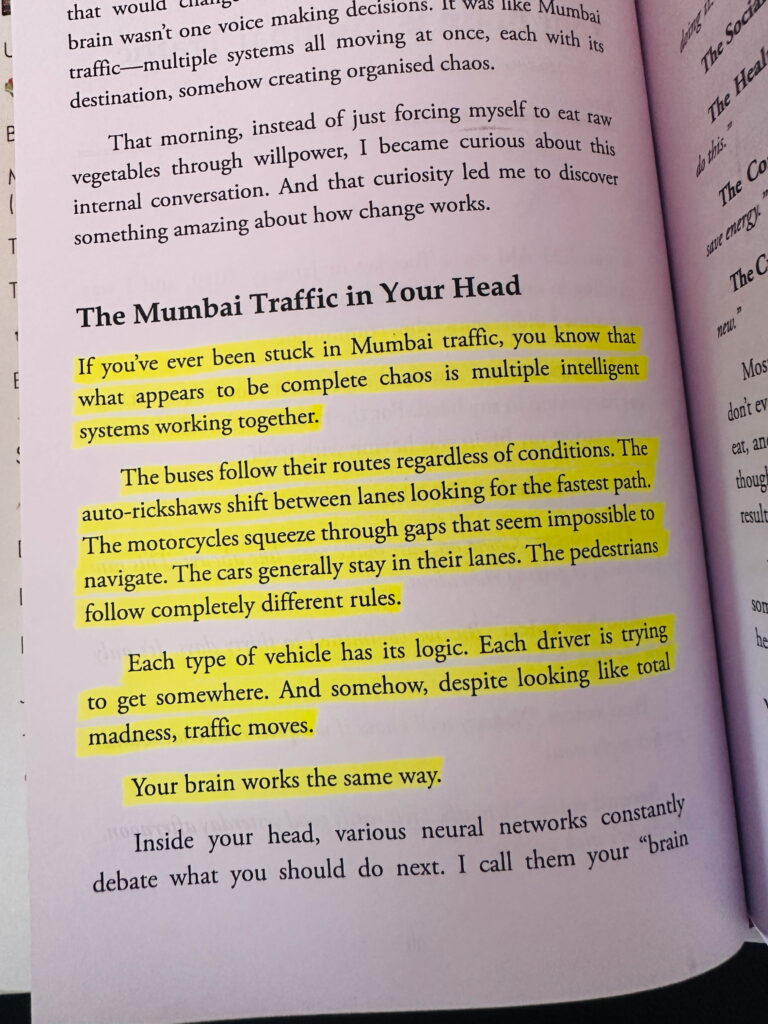
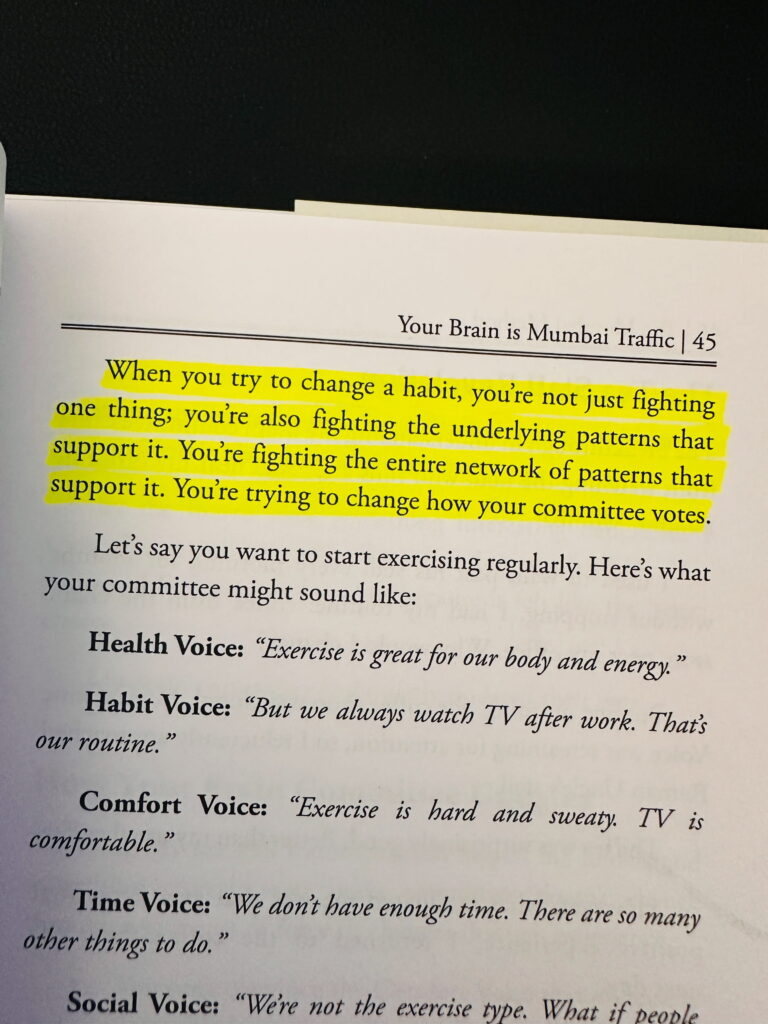
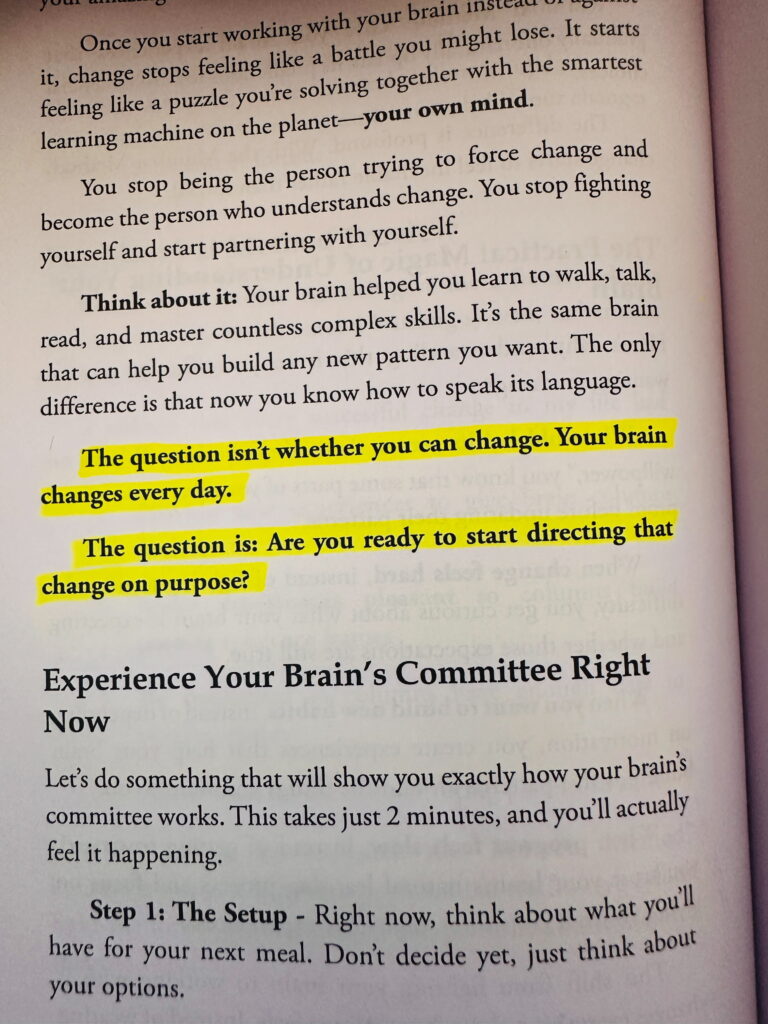
To understand why traditional willpower fails, you have to understand your brain’s architecture. You aren’t just one single mind making decisions; you are a parliament of tiny processing units called cortical columns. Together, they form a “brain committee” that constantly votes on what you should do next based on your past experiences.

Imagine this committee like the organized chaos of Mumbai traffic. The buses are your Habit Voice, stubbornly sticking to reliable, familiar routes. The private cars are your Comfort Voice, prioritizing safety and ease. When you try to suddenly start a difficult workout routine, your Health Voice might vote “yes,” but your Habit, Comfort, Time, and Energy voices are all aggressively voting “no”.
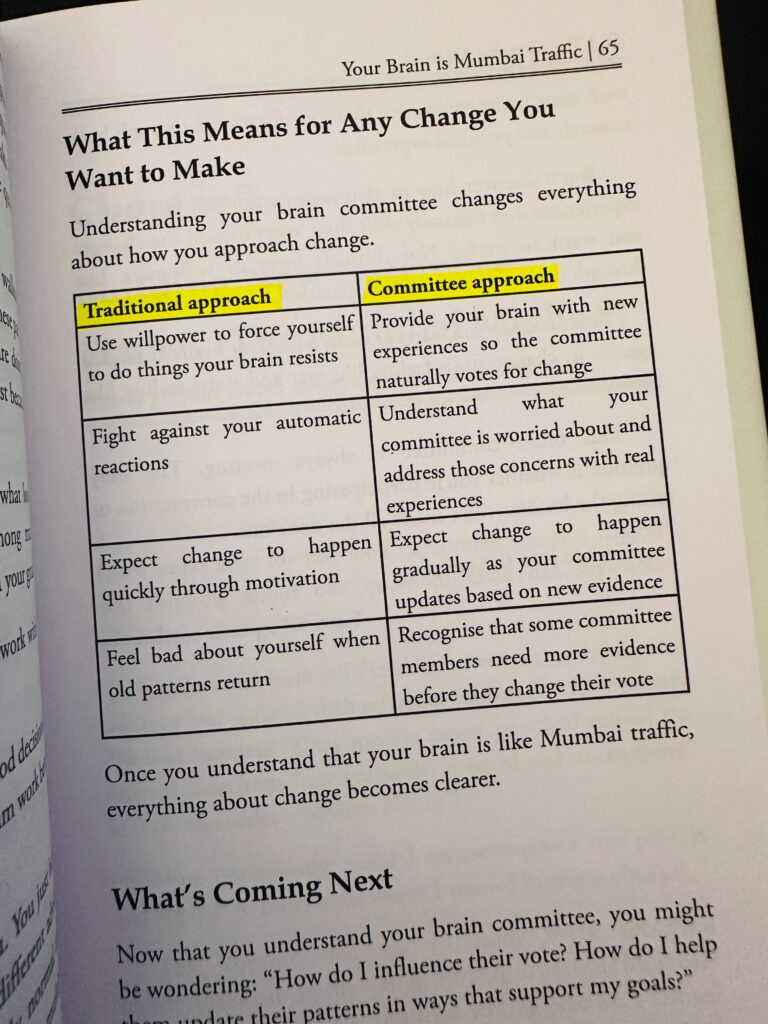
Willpower is essentially asking your conscious mind to overrule thousands of these expert neural networks that have spent years building evidence that sitting on the couch feels better than sweating. It’s exhausting, and it rarely works long-term.
The 4 Pillars of the Mumbai Method
So, how do you get the committee to change its vote? You don’t argue with them; you give them new data. By providing your brain with fresh, positive experiences, you gradually update its internal predictions. The Mumbai Method outlines four pillars to naturally shift this neural vote:
1. Start Small and Pleasant Traditional advice tells you to push through the pain. The Mumbai Method says the exact opposite. If you want to build a habit, it must be enjoyable. When the author wanted to eat healthier, he didn’t force himself to eat bitter greens; he started by eating raw vegetables he actually loved, like cucumbers and bell peppers. By making the experience pleasant, he trained his neural networks to associate healthy eating with reward, not punishment. Your brain’s committee won’t fight a change that feels good.
2. Be Consistently Present Your brain cannot distinguish between a real pattern and a random event without repetition. To rewire your neural pathways, you need to show up consistently. A 30-day experiment is often enough to provide the “data density” your brain needs to update its predictions. The goal isn’t perfection or massive intensity; the goal is simply establishing a reliable pattern that your brain can recognize and eventually automate.
3. Connect with Who You Are If a new habit clashes with your identity, your brain will resist it. Instead of trying to become a completely different person overnight, align the new behavior with your existing values. For example, if you view yourself as a curious person, frame a new diet not as a strict permanent rule, but as a fun “30-day experiment” to learn about your body. When a change feels like a natural expression of who you already are, the parts of your brain that handle identity will vote to support it.
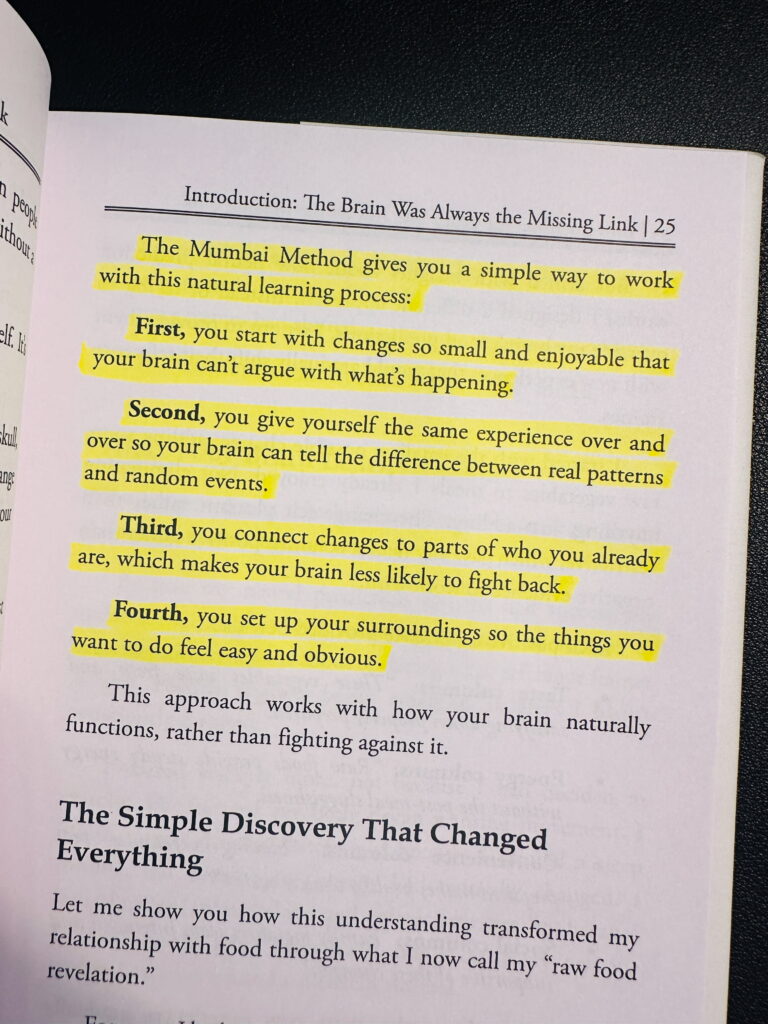
4. Set Up Your World to Help Your environment is constantly casting votes in your brain committee, often without you realizing it. The author’s biggest breakthrough in eating healthy didn’t come from sheer determination; it came from washing, cutting, and placing his vegetables in a highly visible steel bowl on his kitchen counter. Suddenly, his Convenience and Visual voices started voting for the vegetables because they were the easiest, most attractive option available. If you want to change your life, redesign your physical spaces so that the right choice is the path of least resistance.
The Transformation Threshold
When you apply these four pillars, change doesn’t happen instantly. It happens gradually, much like how the residents of Mumbai adapt to the annual monsoon. During the first few weeks, the new patterns might feel a bit split as the brain committee debates. But eventually, a threshold is crossed.
You will wake up one day and realize you aren’t forcing yourself anymore. You reach for the healthy breakfast or head out for the walk simply because it feels like the most obvious, natural choice. You don’t just have a new habit; you have new desires.
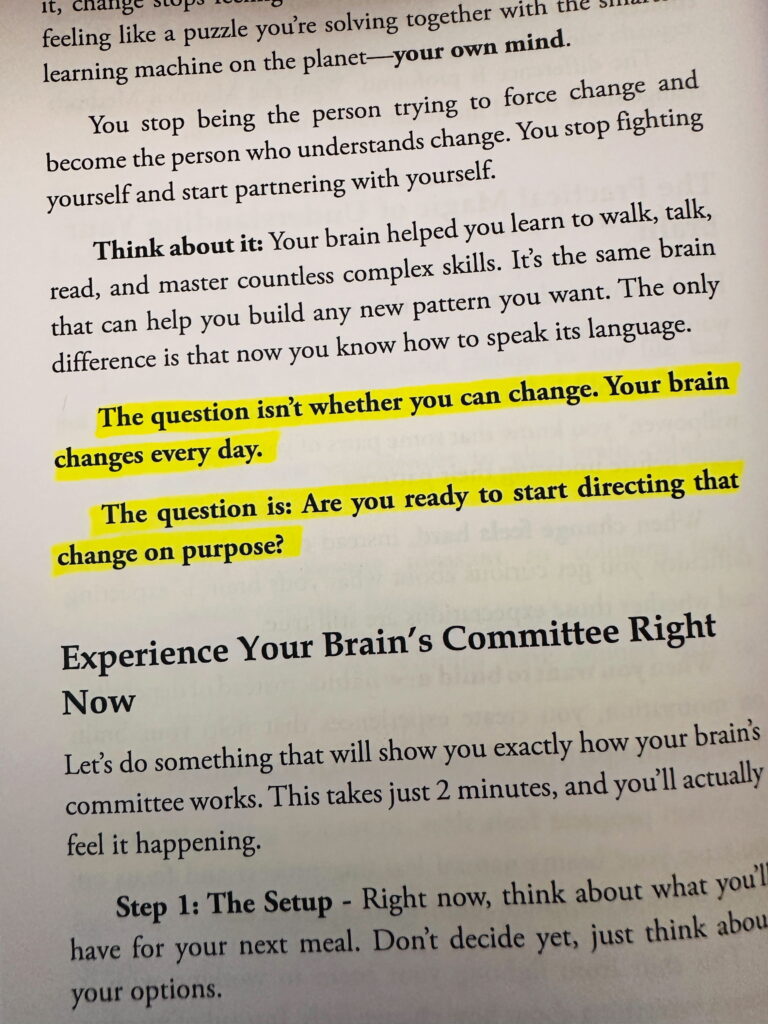
Ultimately, The Mumbai Method is a beautiful reminder that you are not broken or undisciplined. You possess the most sophisticated learning machine in the universe. Once you stop going to war with your brain and start collaborating with its natural rhythms, lasting transformation isn’t just possible—it becomes inevitable.